Email Templates for Any Kind of Business
Why Your Email Design Matters More Than You Think
You've got about three seconds to grab someone's attention in their inbox. That's it. Three seconds before they either keep reading or hit delete. And honestly, the words alone won't save you. People respond to what they see first, and that means your email design needs to do heavy lifting before anyone reads a single sentence.
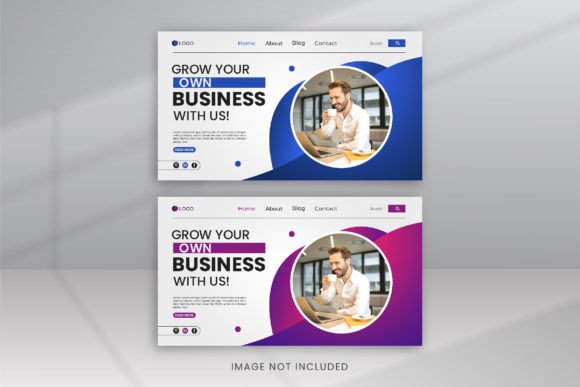
Email Templates for Any Kind of Business solves a problem that trips up countless professionals every single week: how do you create polished, responsive email campaigns without spending hours wrestling with code or hiring a developer? These templates give you a starting point that actually looks professional, works across devices, and adapts to whatever kind of business you're running.
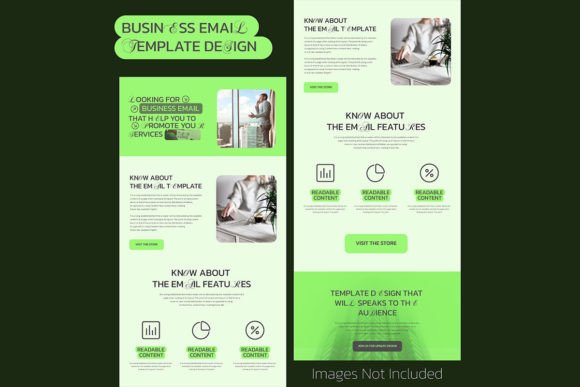
The layout dimensions sit at 600×1998 pixels, which is the sweet spot for email rendering across major clients like Gmail, Outlook, and Apple Mail. That's not arbitrary. That dimension follows industry standards for maximum compatibility, so you're not gambling on whether your design will break when it lands in someone's inbox.
Clean, Flat Design That Works Everywhere
Let's talk about what these templates actually look and feel like. The visual style leans into flat design principles, which means no unnecessary gradients, no heavy drop shadows, no decorative clutter competing with your message. Everything stays clean, modern, and intentional. The whitespace is generous. The typography hierarchy is clear. The color blocks serve a purpose rather than filling space for the sake of it.
This kind of design language works because it doesn't fight your content. Whether you're running an e-commerce store sending product launches, an agency pitching services, a blogger sharing weekly roundups, or a photographer showcasing a new portfolio, the template frame supports what you're saying rather than distracting from it. That versatility is exactly what makes Email Templates for Any Kind of Business genuinely useful across so many different industries and creative disciplines.
The flat design approach also translates beautifully across screen sizes. Responsive email design is tricky territory, and templates that start with clean, simple structures tend to hold up better when they scale down to mobile. You won't spend your afternoon troubleshooting why a column broke on an iPhone screen.
Built for Real Professionals, Not Just Designers
Here's something worth noting. You don't need to be a seasoned graphic designer to work with these files. The templates come organized with well-structured layers in both Adobe Illustrator and EPS formats. Every element sits in its own labeled layer, which means you can swap out images, adjust colors, change text, and restructure sections without hunting through a tangled mess of unnamed objects.
For freelancers and small business owners who handle their own marketing, this matters enormously. You're already juggling a dozen responsibilities. The last thing you need is a design file that requires a tutorial just to change the header text. These templates keep things straightforward so you can focus on your actual message and strategy.
The inclusion of free Google Fonts is another practical detail worth mentioning. Font licensing can trip people up, especially when you're sending emails to large subscriber lists or using designs across commercial projects. Having fonts included that carry open licensing removes that headache entirely. You get a polished typographic look without worrying about whether you're violating someone's licensing terms.
From E-Commerce to Creative Portfolios
Think about the range of professionals who send emails regularly. Retail businesses announce sales and new arrivals. Magazines and blogs distribute newsletters. Corporate teams send internal communications and client updates. Agencies pitch new business. Designers and photographers share their latest work. Each of these scenarios needs a slightly different visual tone, but they all need the same foundational qualities: readability, professional appearance, and brand consistency.
Email Templates for Any Kind of Business addresses this by providing a multipurpose framework rather than a rigid, single-use design. You can adapt the same template structure for a minimalist fashion brand or a colorful craft supply shop. The bones stay solid while the surface details reflect your specific identity.
This adaptability also supports brand identity work. If you're building a visual language for a business, your email templates need to align with your logo design, your website, your social media graphics, and your print materials. Starting with a clean, well-organized template makes that alignment much easier to achieve because you're working with a structure that respects visual hierarchy and modern typography conventions.
Practical Tips for Getting the Most Out of Your Templates
Before you commit to any template set, test it against your specific needs. Open the files, explore the layers, and ask yourself a few honest questions. Does the layout support the kind of content you typically send? Can you realistically customize it within your skill level and available time? Does the visual personality match your brand or your client's brand?
Font pairing deserves attention too. Even though the templates include recommended fonts, you might want to swap in a typeface that matches your existing brand guidelines. When you do, pay attention to contrast and readability. A bold display font for headlines paired with a clean sans serif font for body text usually works well. Avoid pairing two fonts that compete for attention at the same size and weight.
Readability should always be your priority. No matter how beautiful a template looks, if your audience struggles to read the text on a phone screen or the call-to-action button blends into the background, the design has failed its primary job. Test your customized template by sending it to yourself on multiple devices and email clients before you send it to your full list.
Finally, keep your files organized once you start customizing. The well-organized layer structure only helps you if you maintain it. Rename layers as you make changes, save versions separately, and document any modifications you make. Future you will thank present you when it's time to create next month's campaign and you need to move quickly.